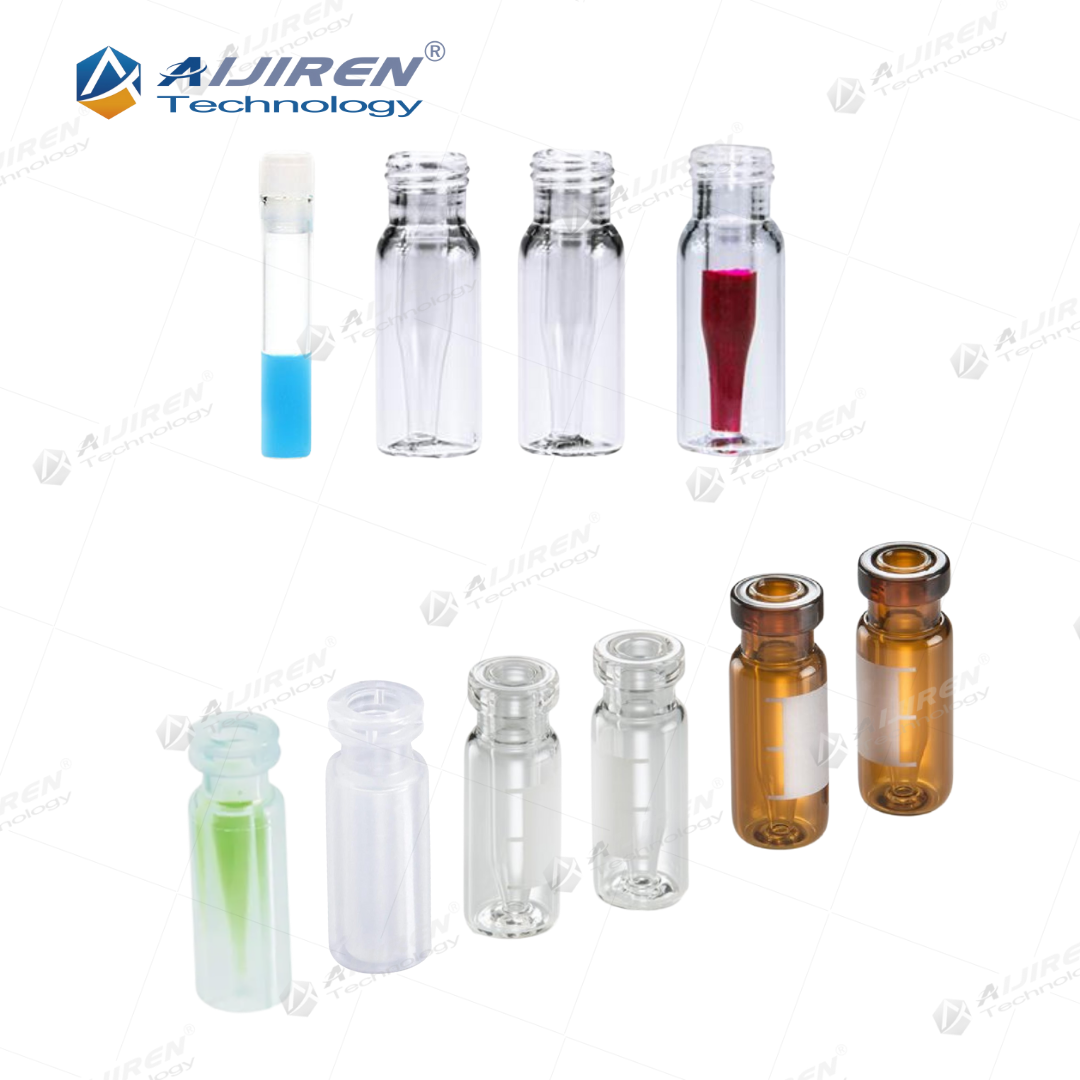
Filter by Application — Find the Right Vial for Your Method
HPLC vs GC — Avoid Selection Overlap: ND9 (9-425) screw vials are the standard for HPLC/UHPLC autosampler injection. ND11 crimp vials provide a hermetic aluminium-sealed closure required for volatile retention in GC headspace and GC-MS workflows — the two are not interchangeable.
PFAS-Free Zone — Strict Boundary: EPA Method 1633 prohibits all fluoropolymer contact. The PFAS-Free section below contains only PP body vials with fluoropolymer-free septa. No PTFE-lined caps appear in that section under any circumstance.
Browse by Closure System — 11 Verified Product Pages
ND9 / 9-425 Short Thread
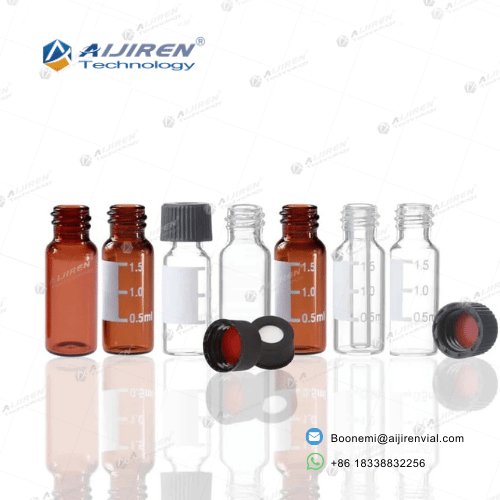
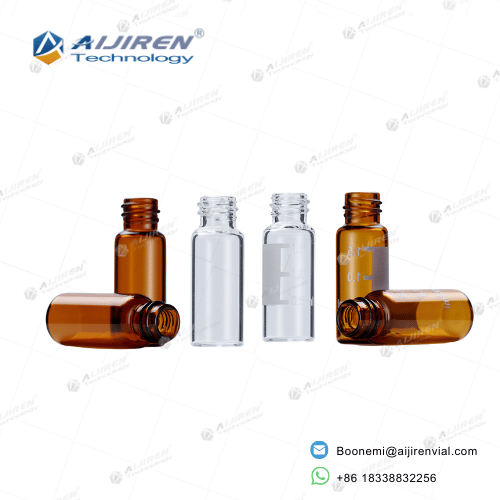
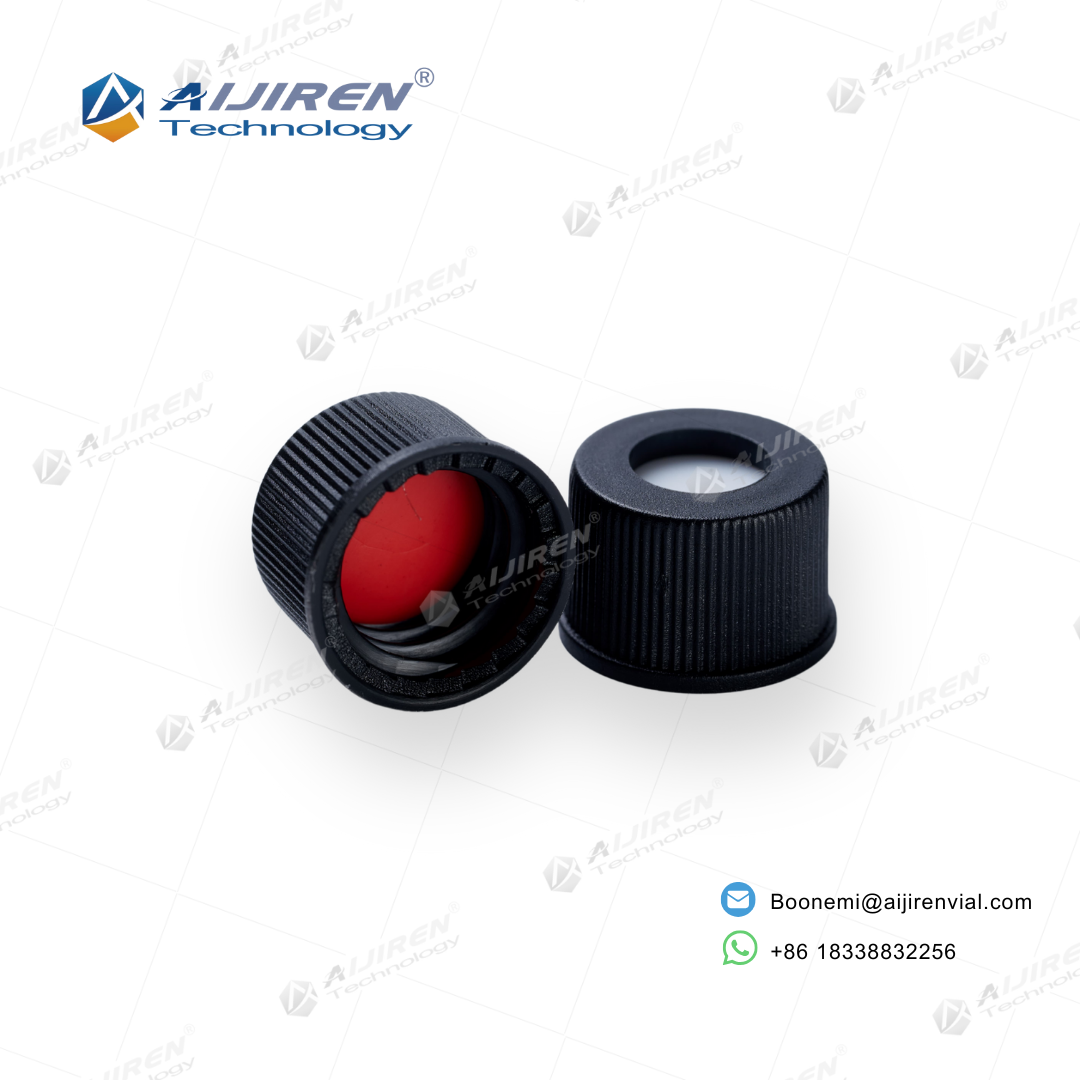
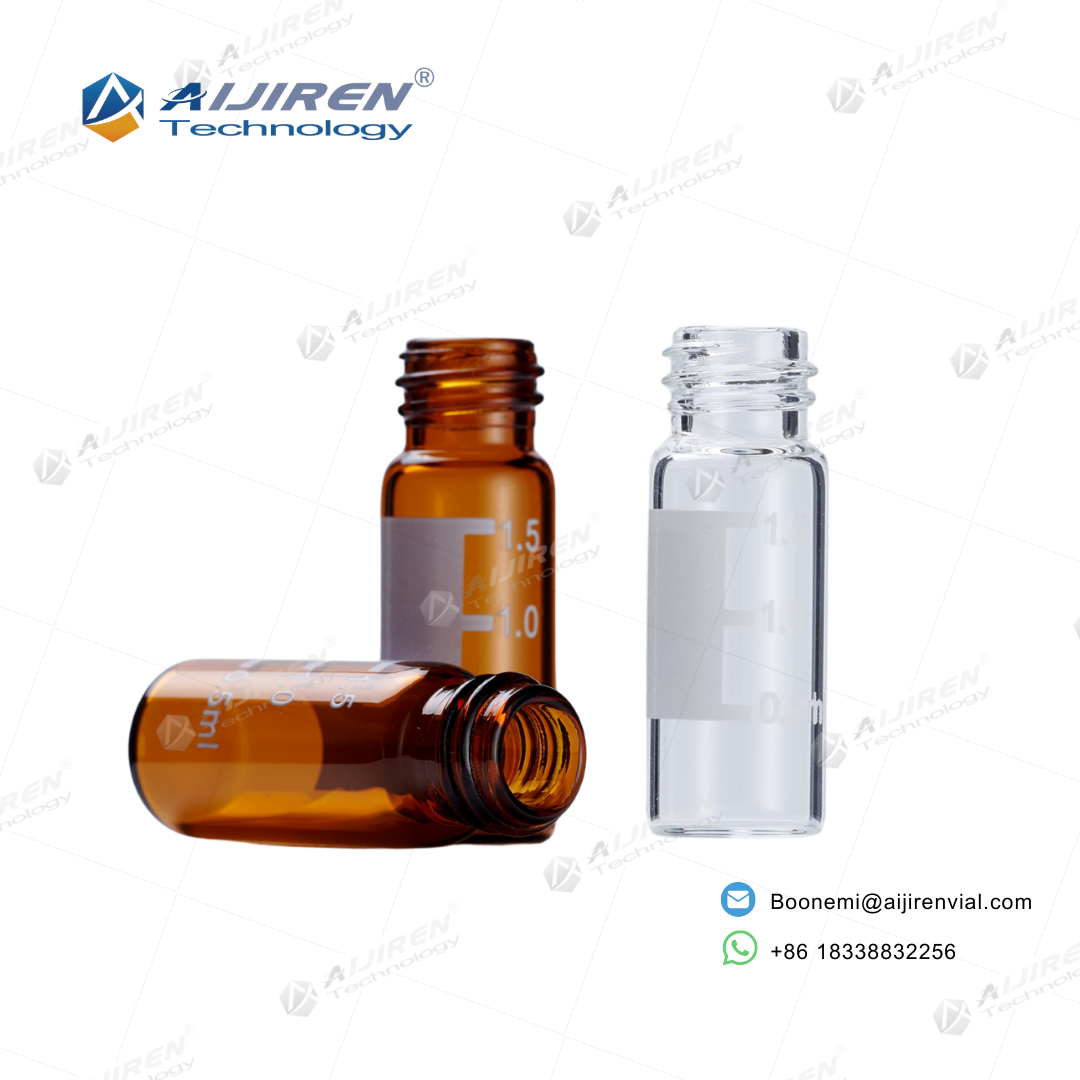
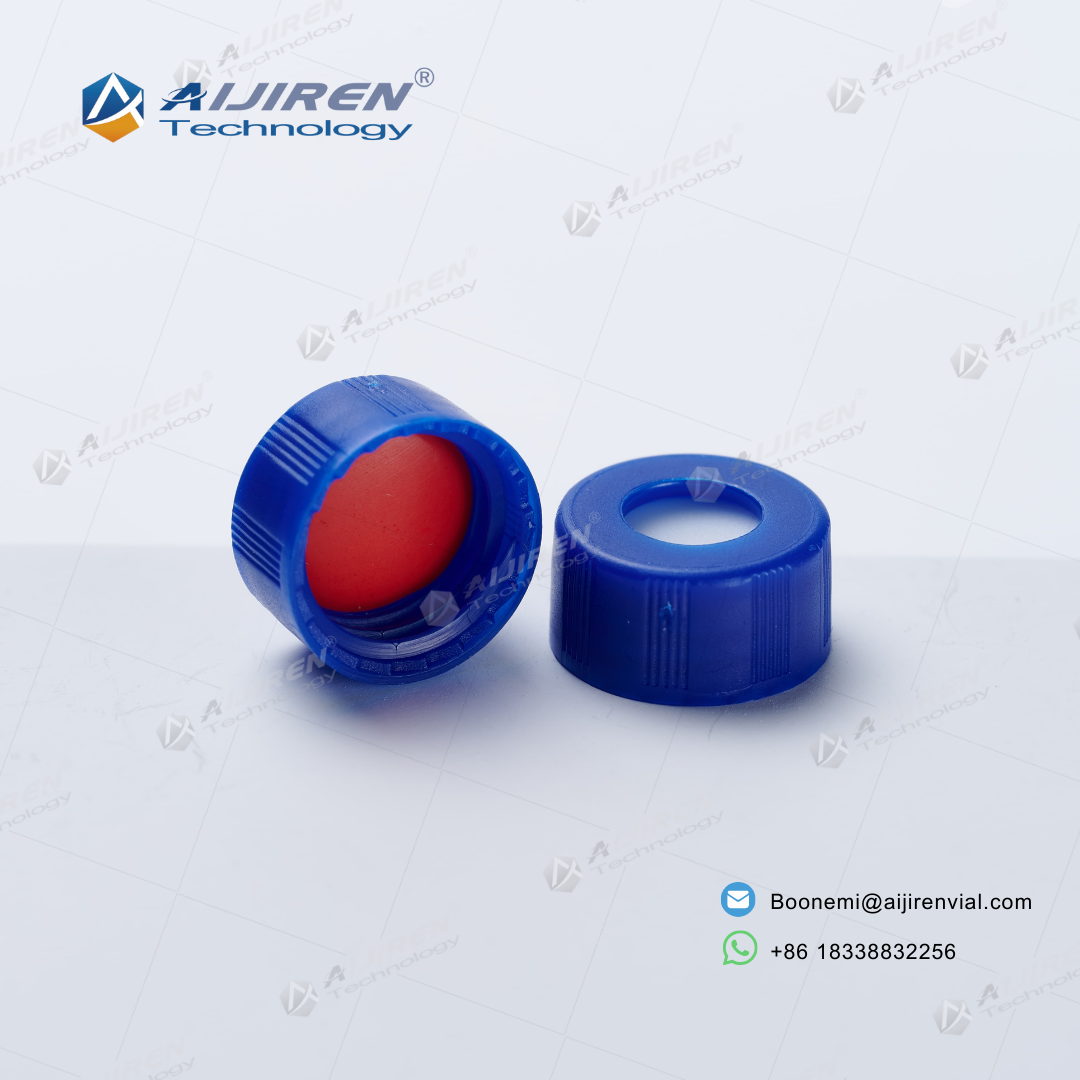
ND9 (9mm) Short Thread — 2026 Universal HPLC Standard
12×32 mm body, ±0.2 mm neck concentricity. Fits Agilent 1260/1290, Waters ACQUITY, Shimadzu Nexera, Thermo Vanquish — no adapter required. Opening is 40% larger than 8-425, eliminating needle deflection at high cycle counts.
USP Type I Borosilicate
Verified compatible: Agilent 1260/1290 Infinity II · Waters ACQUITY UPLC · Shimadzu Nexera SIL-30/40 · Thermo Fisher Vanquish
ND11 / 11mm Crimp + Snap
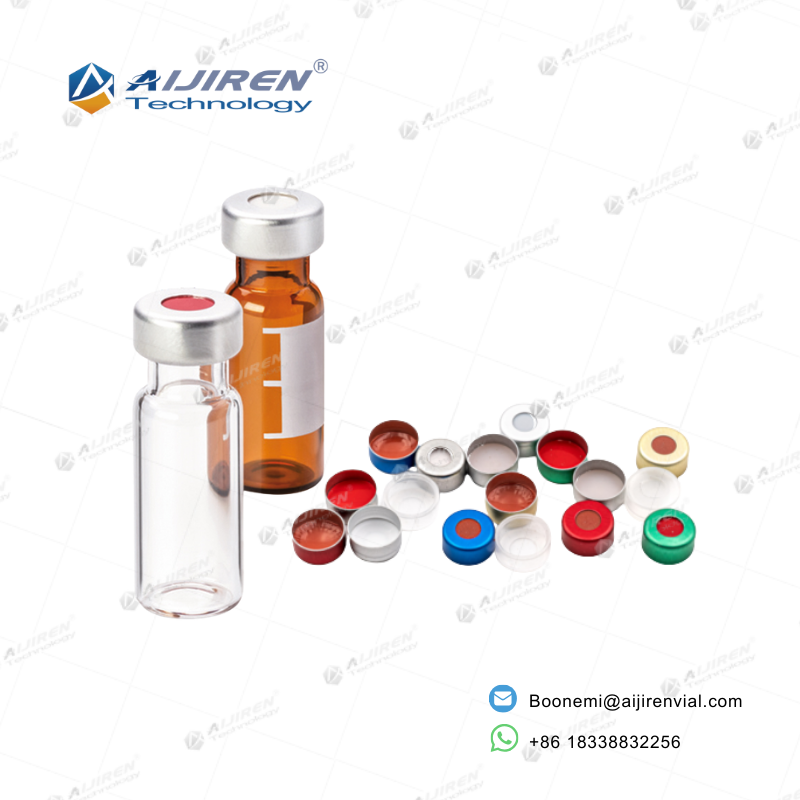
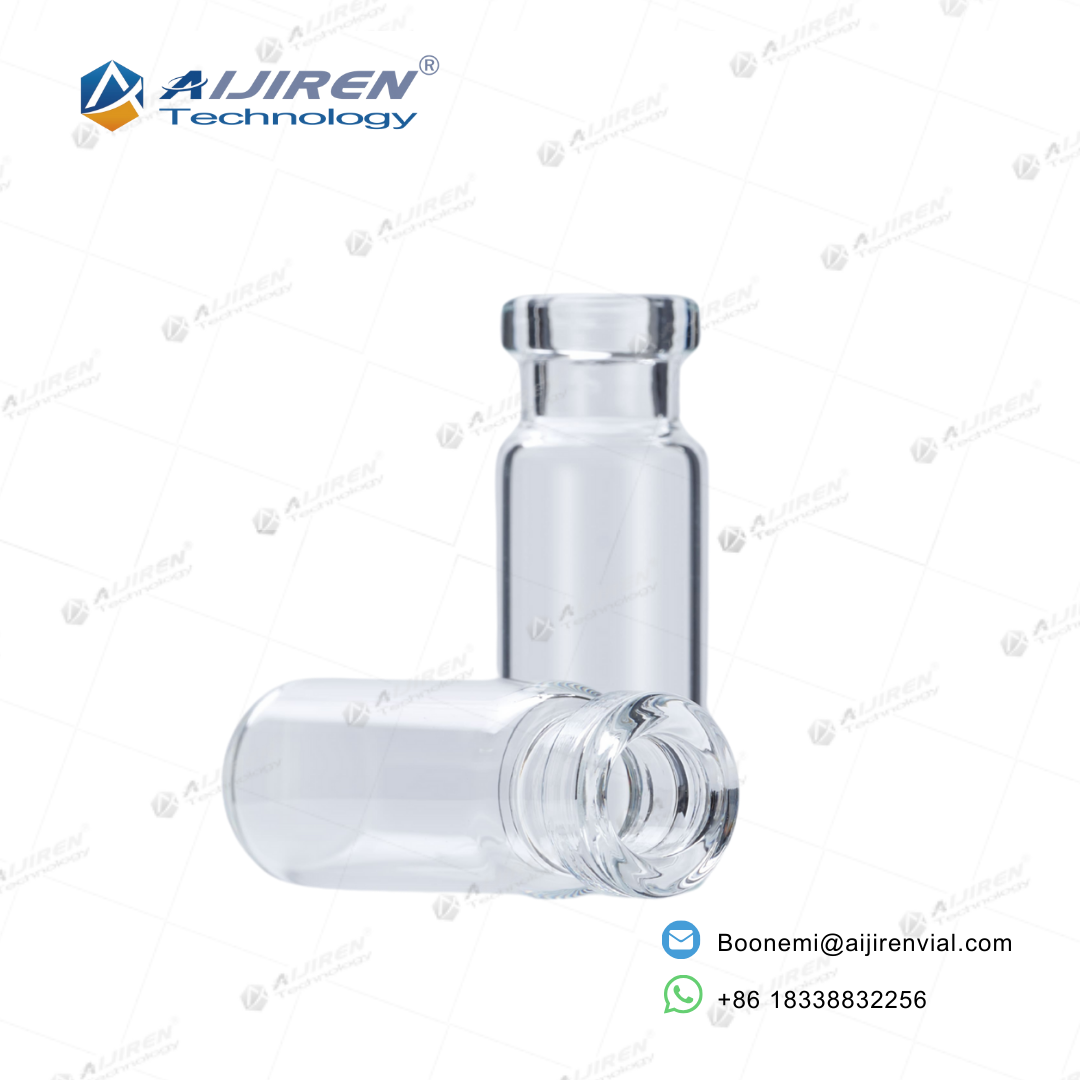
ND11 Crimp & Snap — GC Volatile Gold Standard & High-Throughput HPLC
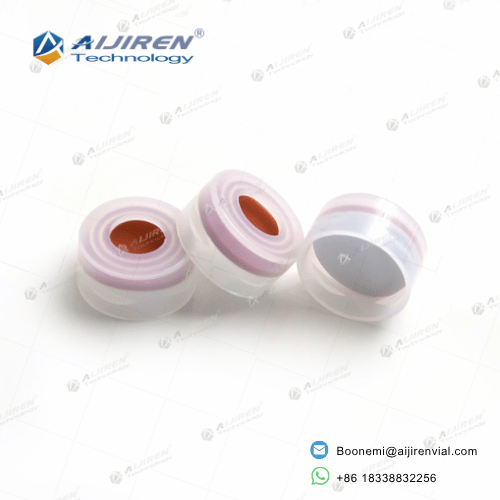
Crimp closure: aluminium shell mechanically locks septa — no relaxation, no volatile concentration drift. Required for GC headspace, GC-MS, and any volatile matrix. Snap closure: tool-free for high-throughput HPLC prep workflows.
USP Type I Borosilicate
GC note: Crimp closure is mandatory for volatile matrices. Snap closure is for HPLC/prep — do not use for GC volatile analysis.
ND8 / 8-425 Screw
ND8 (8-425) Screw — Legacy Platform & Specific Brand Compatibility
Retained for Agilent 1100/1200 and select older Waters Alliance platforms installed before 2018. The 8-425 opening is 40% narrower than ND9 — increased needle contact probability at high cycle rates. For all systems from 2018 onwards, ND9 is the recommended specification.
Legacy Compatible
ND10 / 10-425 Wide Opening
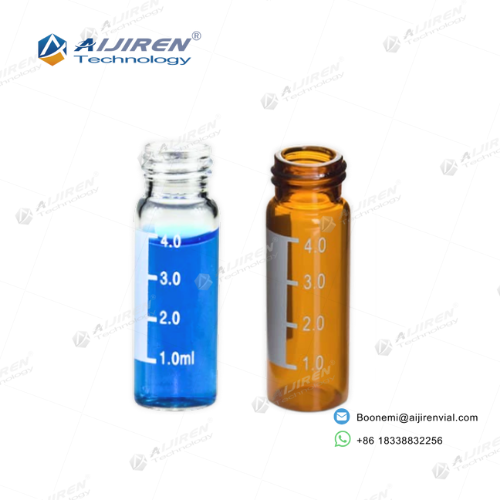
ND10 (10-425) Screw — Wide Opening for Microvolume Inserts & Manual Pipetting
Maximum needle alignment clearance. Reduces cross-contamination risk during manual pipetting. Ideal for LC-MS/MS bioanalysis with low-volume samples (DBS reconstitution, microsampling workflows). 1.5 mL body with 10-425 thread.
Bioanalysis Optimised
Regulatory Compliance — PFAS-Free Dedicated Zone
PFAS-Free Vials & Closures — EPA Method 1633 / EPA 533 / EPA 537.1
Standard PTFE/silicone septa are a PFAS precursor material. Under EPA Method 1633 (effective January 2026), all fluoropolymer contact surfaces must be eliminated from PFAS sample containers. This section contains only fluoropolymer-free consumables.
Prohibited — Not Compliant for PFAS Trace Work
PTFE/silicone septa — PTFE is a perfluorinated polymer
PTFE-lined screw caps in sample contact zone
Any glass vial with fluoropolymer coating
Compliant PFAS-Free Configuration
Polypropylene (PP) vial body — zero fluoropolymer
Polyimide or high-purity silicone septa only
Background verified below 2.5 ppt for 47 target analytes
Meets EPA 533, 537.1 & Method 1633
Part Numbers — PFAS-Free PP Vials & Closures: VP923 (PP screw vials, 1.5 mL, 9-425), VP923A (amber PP), with polyimide septa caps. These products are not yet listed in the online store — please contact your account manager or use the
Technical Consultation form below for pricing and availability.
Trace Analysis — Sub-100 ng/mL Selection Rule
Trace Analysis & LC-MS Vial Selection — 33 Expansion + Silanization
For any method below 100 ng/mL, USP Type I, 33-expansion (Class A) borosilicate is mandatory. Expansion coefficient 33×10⁻⁷/°C — lowest metal ion leaching of all commercial glass. Prevents Na⁺/Ca²⁺ adduct formation in MS.
33 Expansion — Type I Class A Clear
Mandatory for:
Trace analysis below 100 ng/mL · LC-MS/MS full-scan · basic drug compounds · protein samples · GTI/ICH M7 genotoxic impurity work
Use 33-Expansion ND9 vials above
Silanized Vials — TMCS Surface Treatment
Surface silanization (TMCS) deactivates glass silanol groups. Required for alkaline drugs, basic proteins, and pesticide residue analysis where silanol adsorption causes peak tailing or analyte loss. Part No. VR913 — see below.
Material Science
33 Expansion vs. 51 Expansion — When Each Glass Type is Correct
Both are USP Type I borosilicate. The correct choice is determined by analyte concentration level and photosensitivity — not by habit or availability.
USP Type I, Class A — 33 Expansion (Clear)
Trace & LC-MS Standard — Mandatory below 100 ng/mL
| Coefficient | 33×10⁻⁷/°C — lowest commercial glass |
| Metal leaching | Lowest available — prevents adducts below 1 ppb |
| Required for | All trace methods, LC-MS, GTI/ICH M7, sub-ppb environmental analysis |
| Avoid if | Analyte is strongly photolabile — use amber instead |
USP Type I — 51 Expansion (Amber)
UV Photodegradation Protection — for Photolabile Analytes
| Coefficient | 51×10⁻⁷/°C — Fe/Mn dopant provides UV block |
| UV blocking | Absorbs 300–500 nm — protects vitamins, pyrethrin pesticides, fluorescent analytes |
| Best for | EPA 8270, ICH Q1B photostability, light-sensitive drugs, photolabile pesticides |
| Note | Slightly higher metal ion content than 33-expansion — do not use at sub-100 ng/mL unless photodegradation risk overrides |
Decision rule: Use 33-expansion (clear) for any method below 100 ng/mL, for basic analytes, or when MS adduct ions are a concern. Use 51-expansion (amber) only when photodegradation is the primary risk and concentration is above 100 ng/mL. When both risks apply, use silanized 33-expansion in light-blocking secondary packaging.
Extended Catalogue — Part Numbers
Products Not Yet Listed Online — Enquire by Part Number
The following products are available from our manufacturing catalogue but are not yet published in the online store. Reference the Part No. below when contacting your account manager.
| Part No. |
Description |
Application |
Enquire |
| VP923 |
PP Screw Vials, 1.5 mL, 9-425, Clear |
PFAS trace analysis (EPA 1633) — zero fluoropolymer body |
Enquire |
| VP923A |
PP Screw Vials, 1.5 mL, 9-425, Amber |
PFAS-free + photolabile analytes |
Enquire |
| VR913 |
Silanized (TMCS) Vials, 1.5 mL, 9-425, Clear |
Alkaline drugs, basic proteins, pesticide residues — silanol deactivation |
Enquire |
| VR913A |
Silanized (TMCS) Vials, 1.5 mL, 9-425, Amber |
Silanized + photolabile: ICH Q1B photostability of basic compounds |
Enquire |
| VC-PI925 |
Polyimide Septa Caps, 9-425, PFAS-Free |
Closure for VP923/VP923A PP vials — zero fluoropolymer contact |
Enquire |
Technical Consultation
Not Sure Which Vial Fits Your Method?
Our application engineers match vials, closures, septa, and material grade to your specific method — HPLC, GC, trace LC-MS, PFAS, or silanized applications. We also handle enquiries for unlisted Part Numbers (VP923, VR913, and extended catalogue items). Free samples available before bulk commitment.
Method-Level Guidance
Ghost peak root cause, vial-method matching, septa selection for your matrix and temperature range.
Unlisted Part Numbers
PP vials, silanized vials, polyimide septa, custom kit assembly — confirmed with stock and lead time.
OEM & Bulk Supply
Custom print, branded packaging, mixed kit assembly. Full supply chain documentation from 500-piece MOQ.

 English
 Chinese
.png)