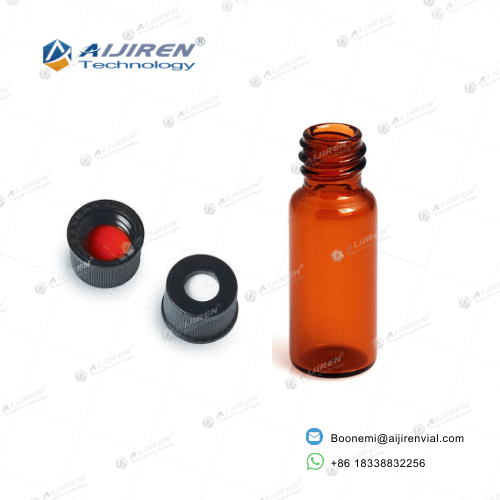
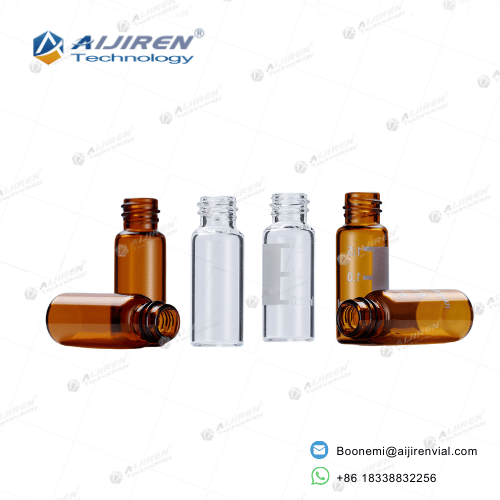
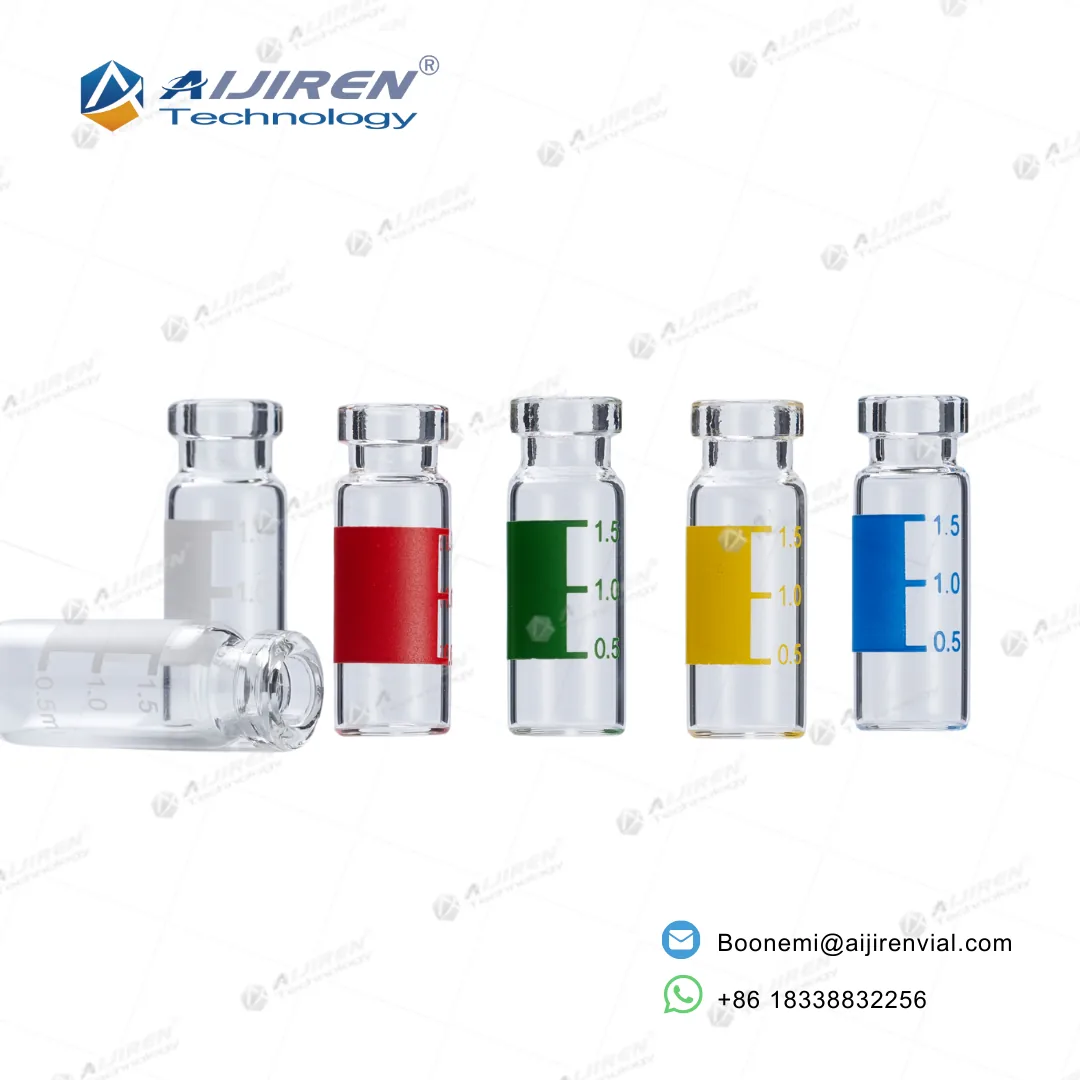
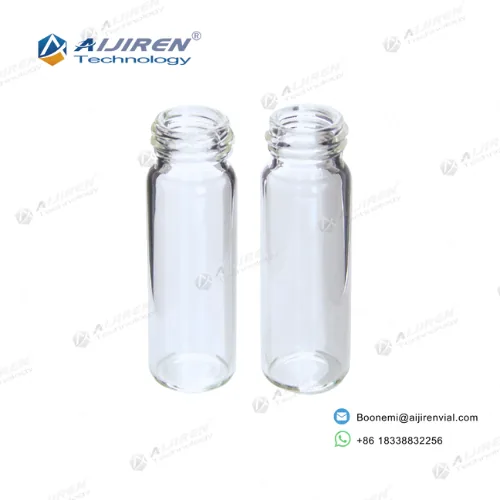
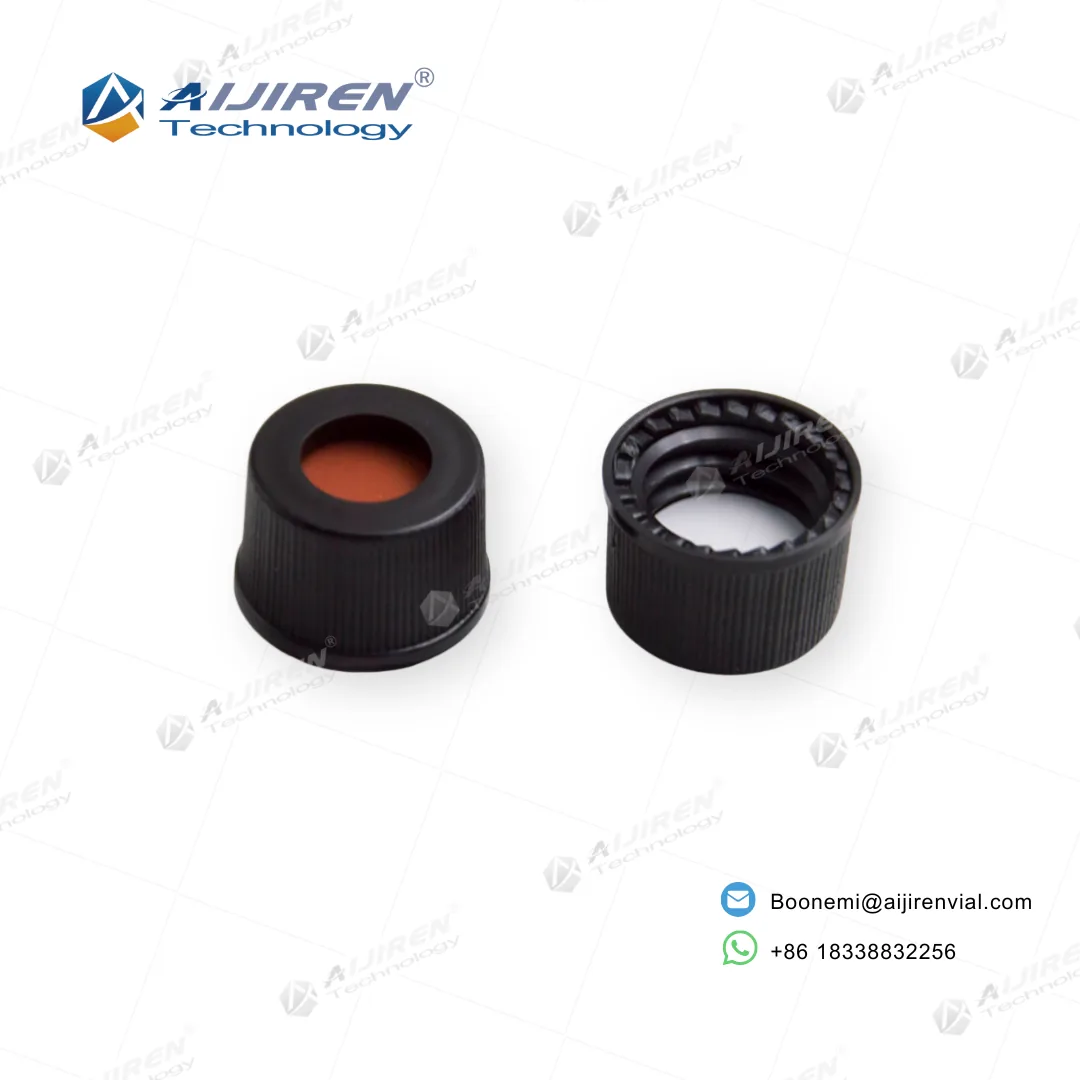
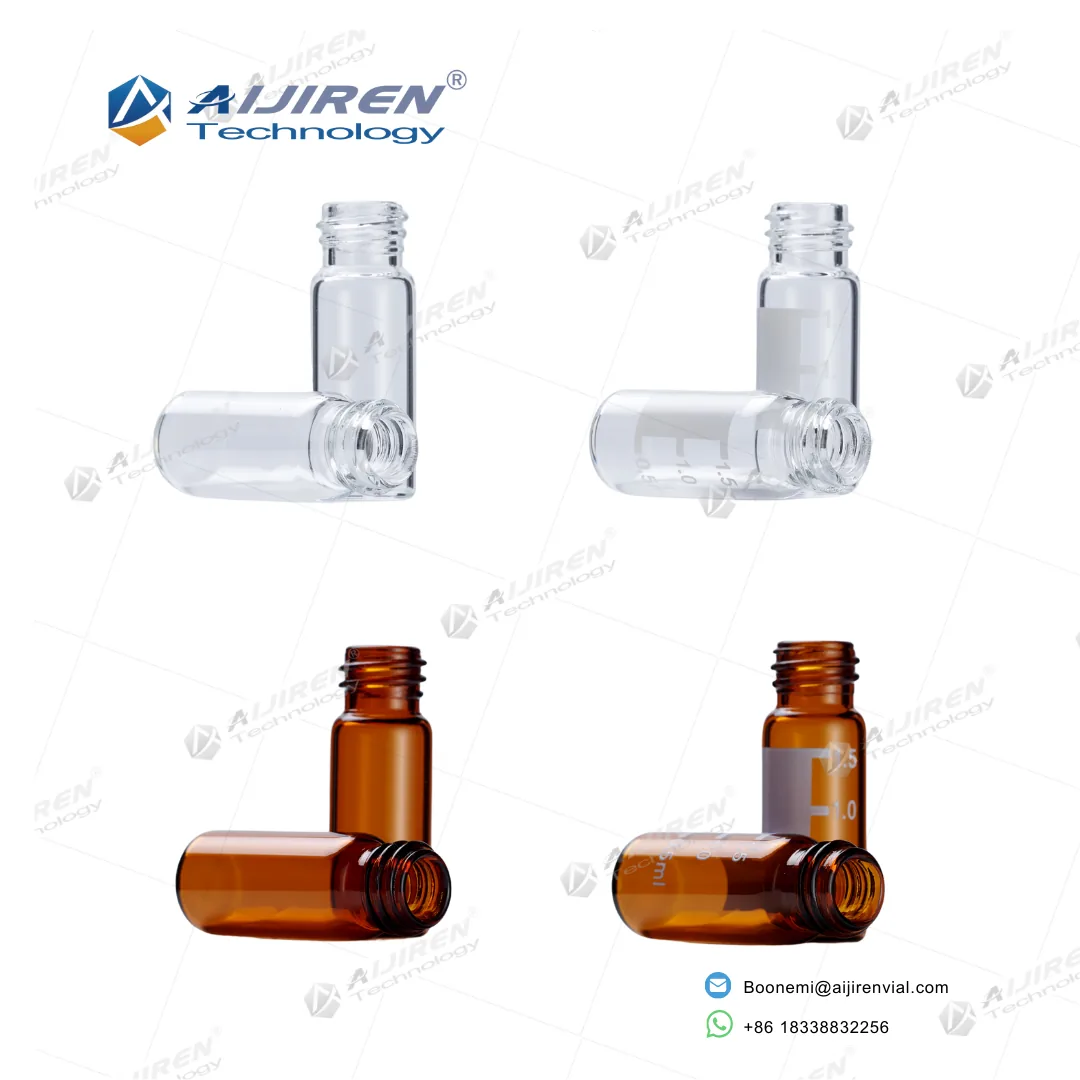
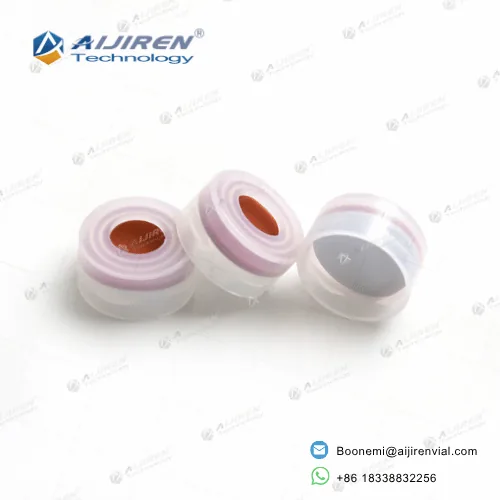
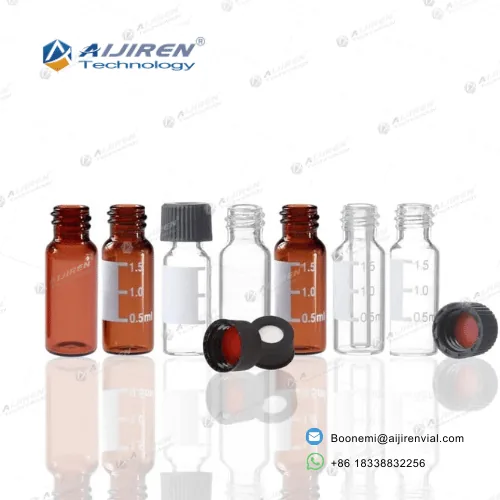
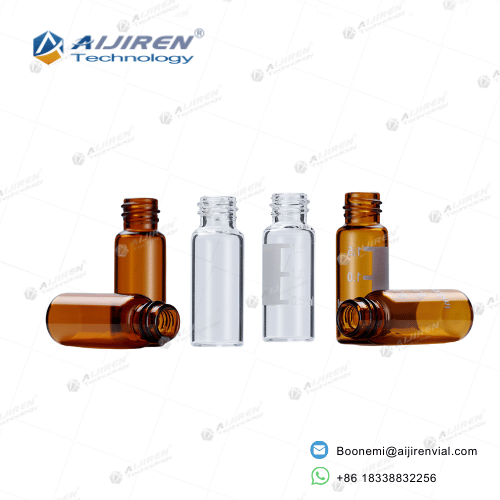
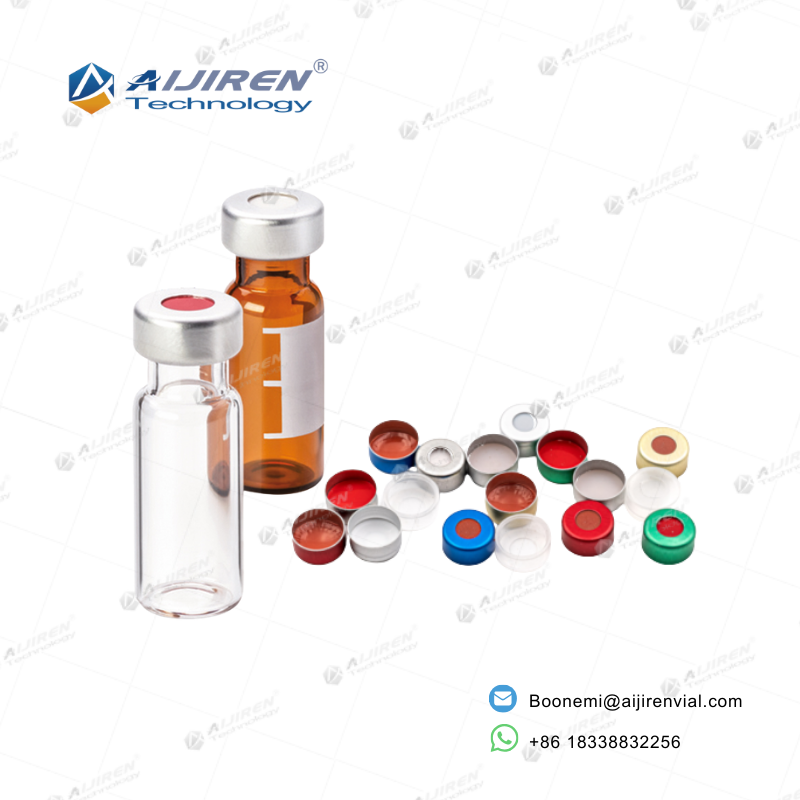
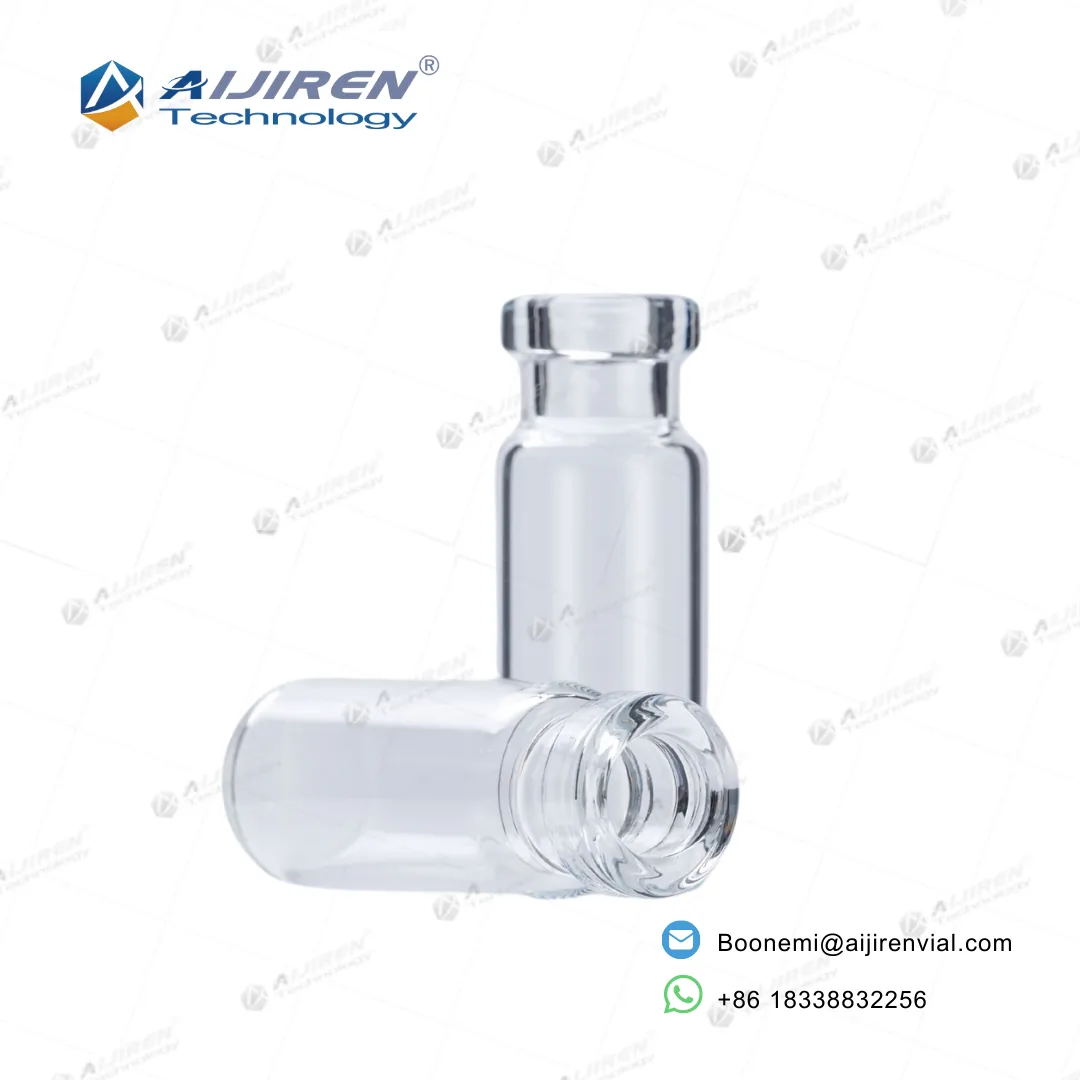
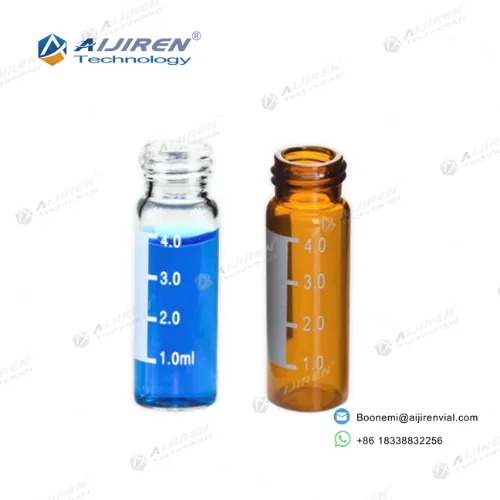
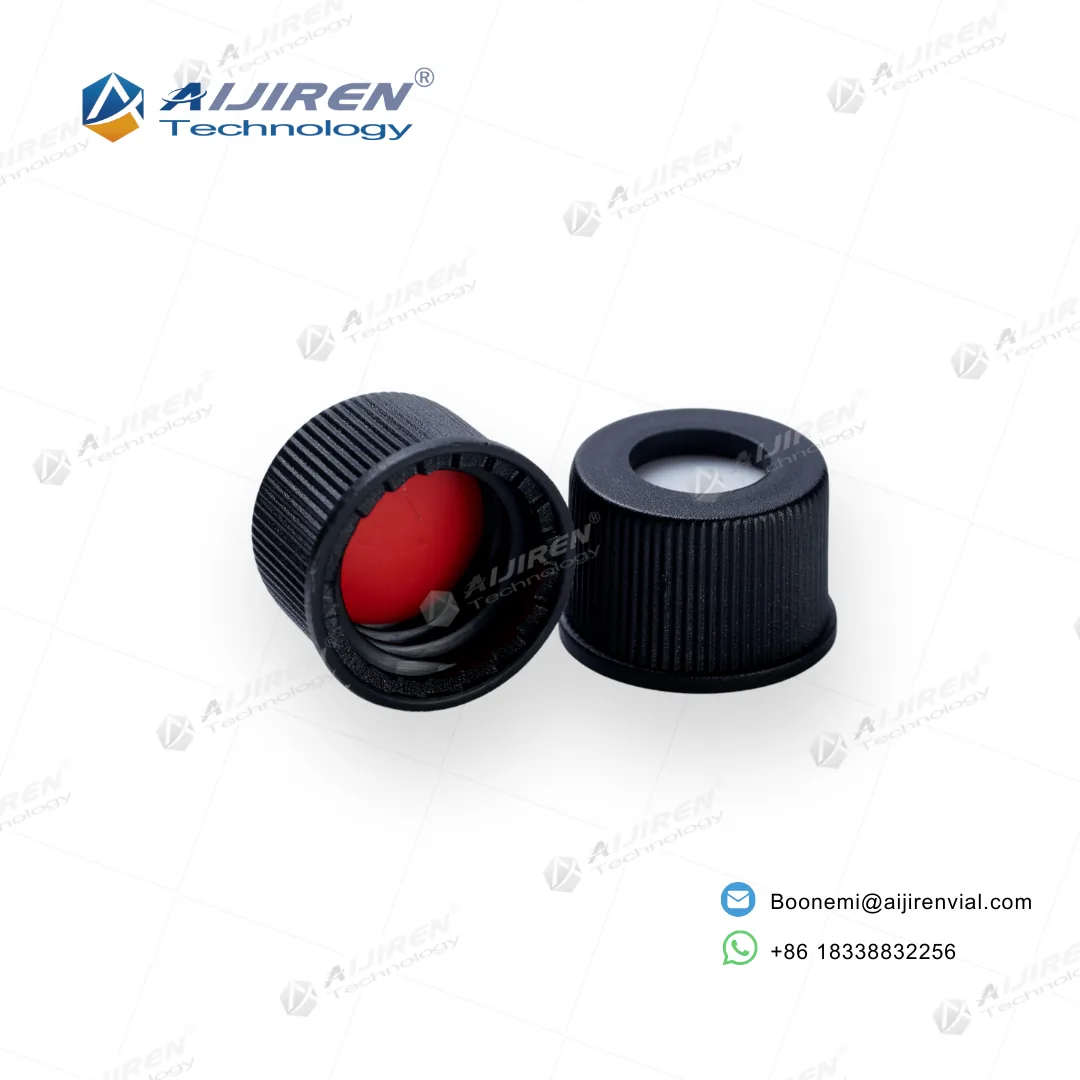
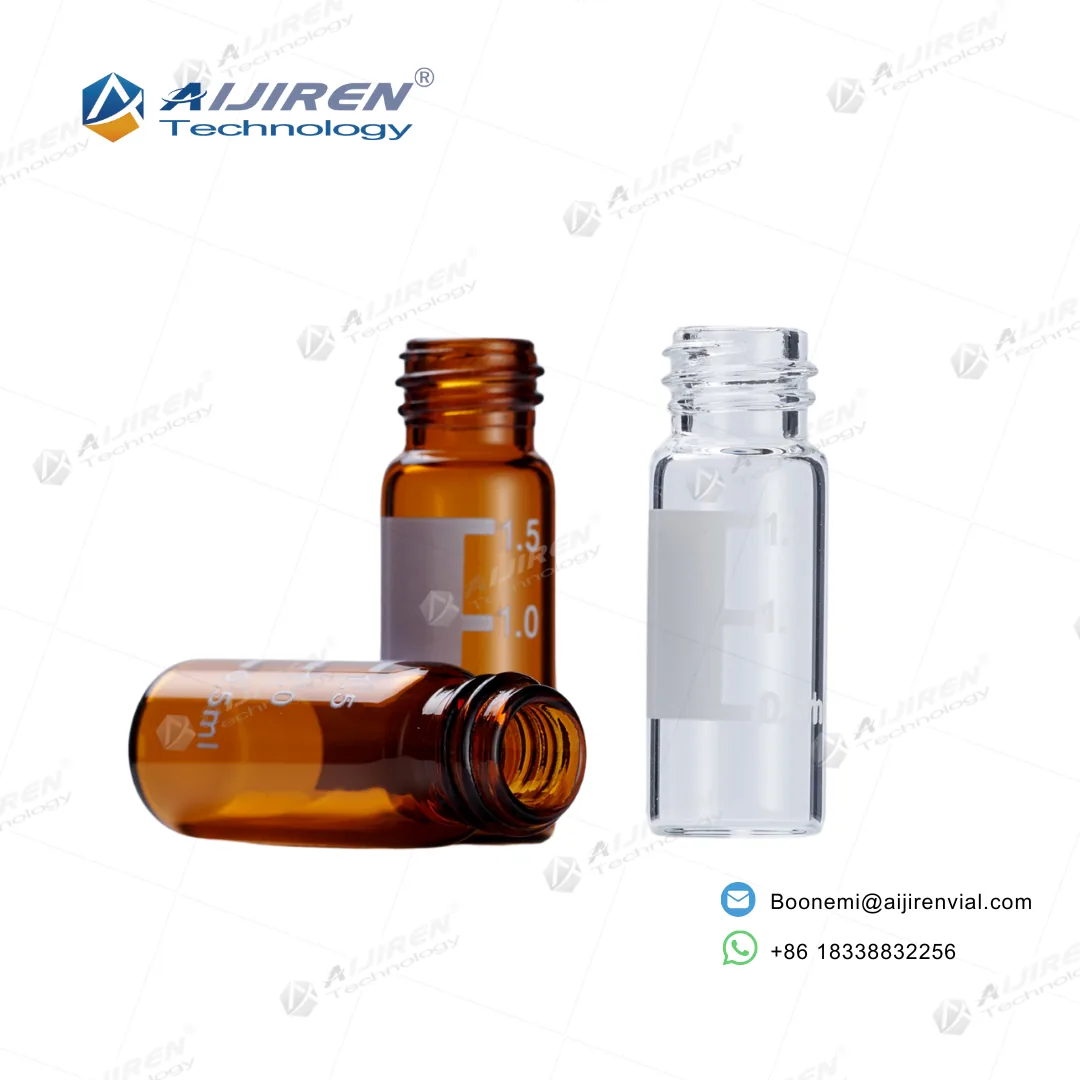
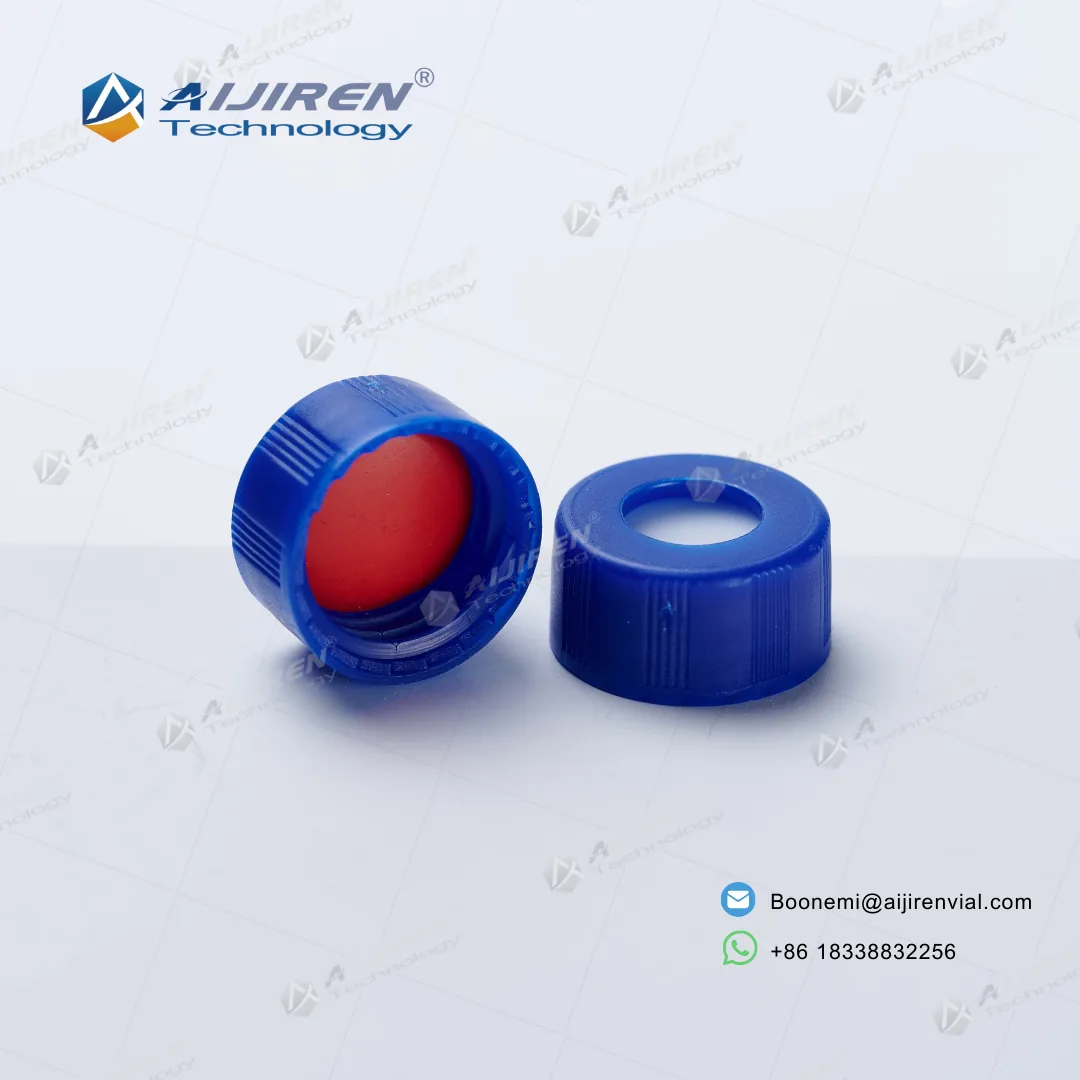
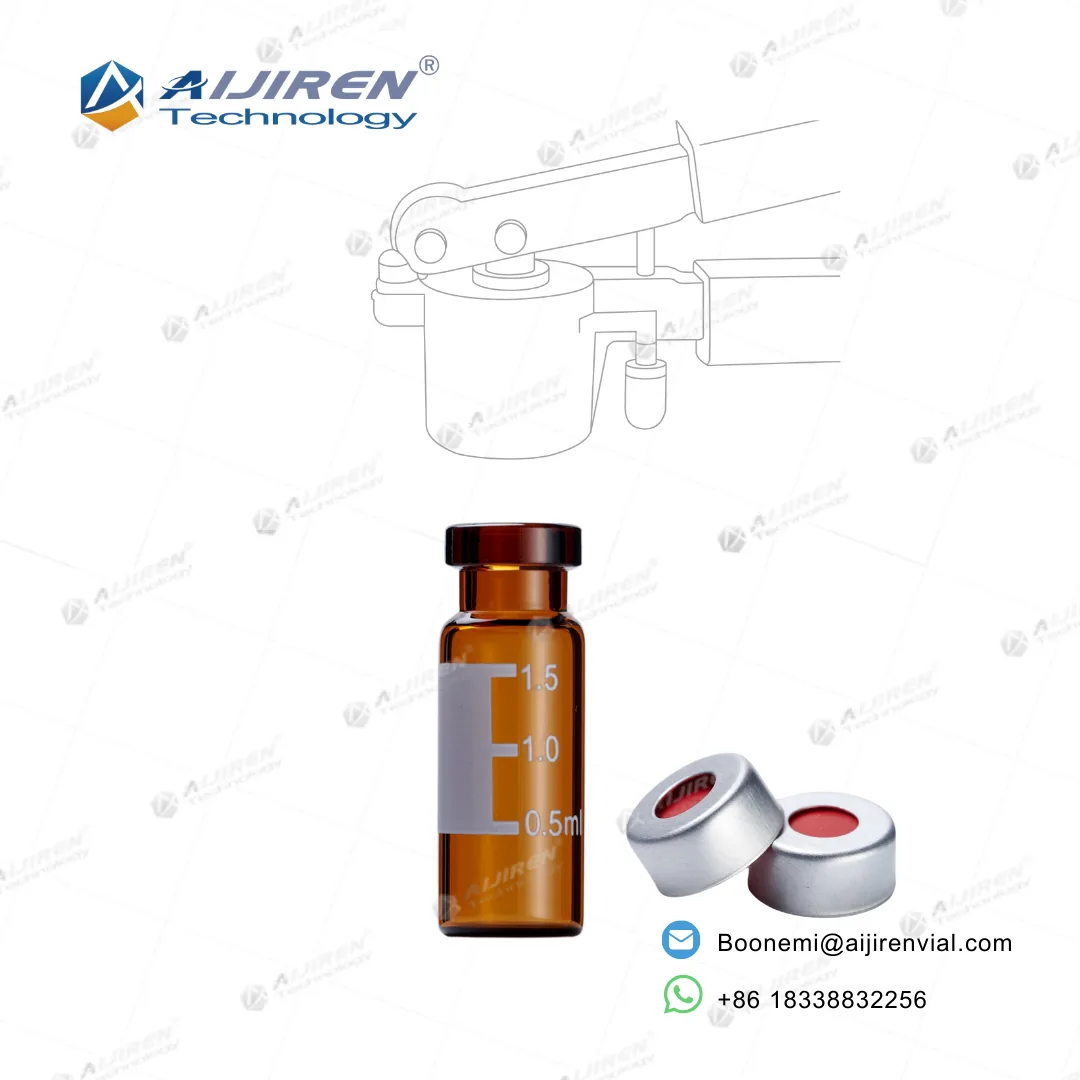
HPLC vs GC — Avoid Selection Overlap: ND9 (9-425) screw vials are the standard for HPLC/UHPLC autosampler injection. ND11 crimp vials provide a hermetic aluminium-sealed closure required for volatile retention in GC headspace and GC-MS workflows — the two are not interchangeable.
PFAS-Free Zone — Strict Boundary: EPA Method 1633 prohibits all fluoropolymer contact. The PFAS-Free section below contains only PP body vials with fluoropolymer-free septa. No PTFE-lined caps appear in that section under any circumstance.
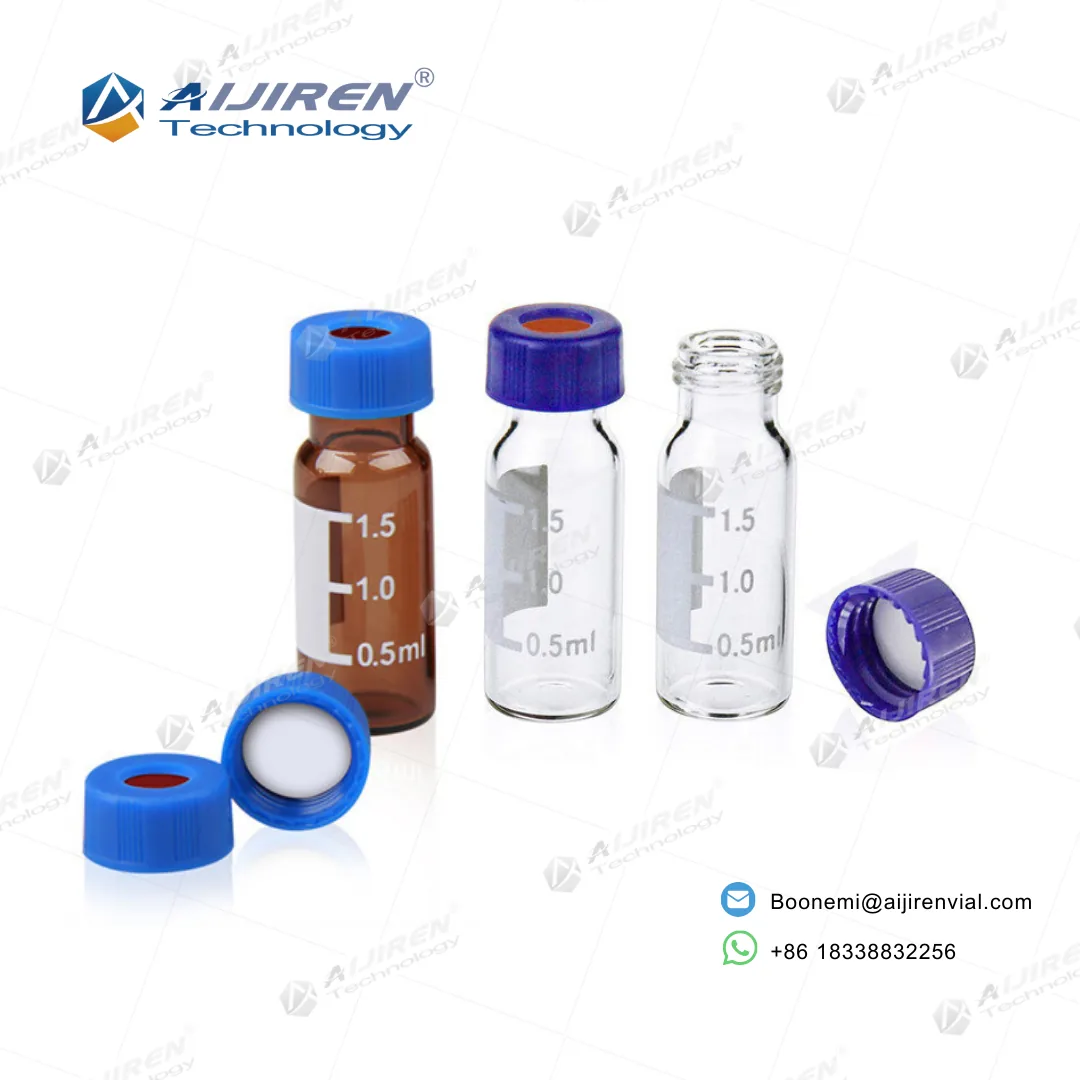
Four decisions determine whether a vial works in your method: the closure format, the nominal volume, the glass type, and whether you need an insert. Get the closure wrong and the vial will not sit in the tray. Get the glass wrong and you will chase adsorption losses that look like an instrument fault.
Closure format — must match your autosampler tower. This is not a preference, it is a fit.
Volume — 1.5 mL and 2 mL dominate; 4 mL for larger injections or wash positions.
Glass — clear or amber, Type I borosilicate or Type III soda-lime, plain or deactivated.
Insert — only when sample volume is limited or you need a narrow reservoir.
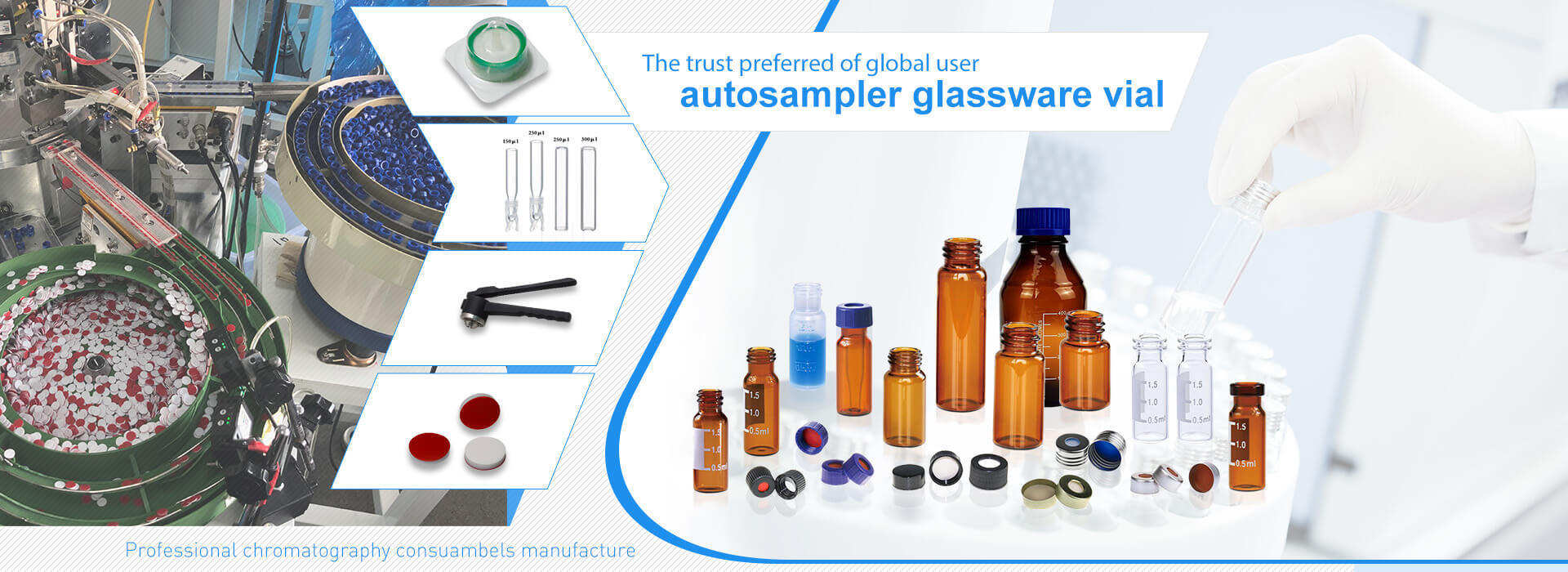
A laboratory operator preparing a vial in an autosampler.
Closure formats compared
Format
Nominal volume
Opening
Tooling
Typical fit
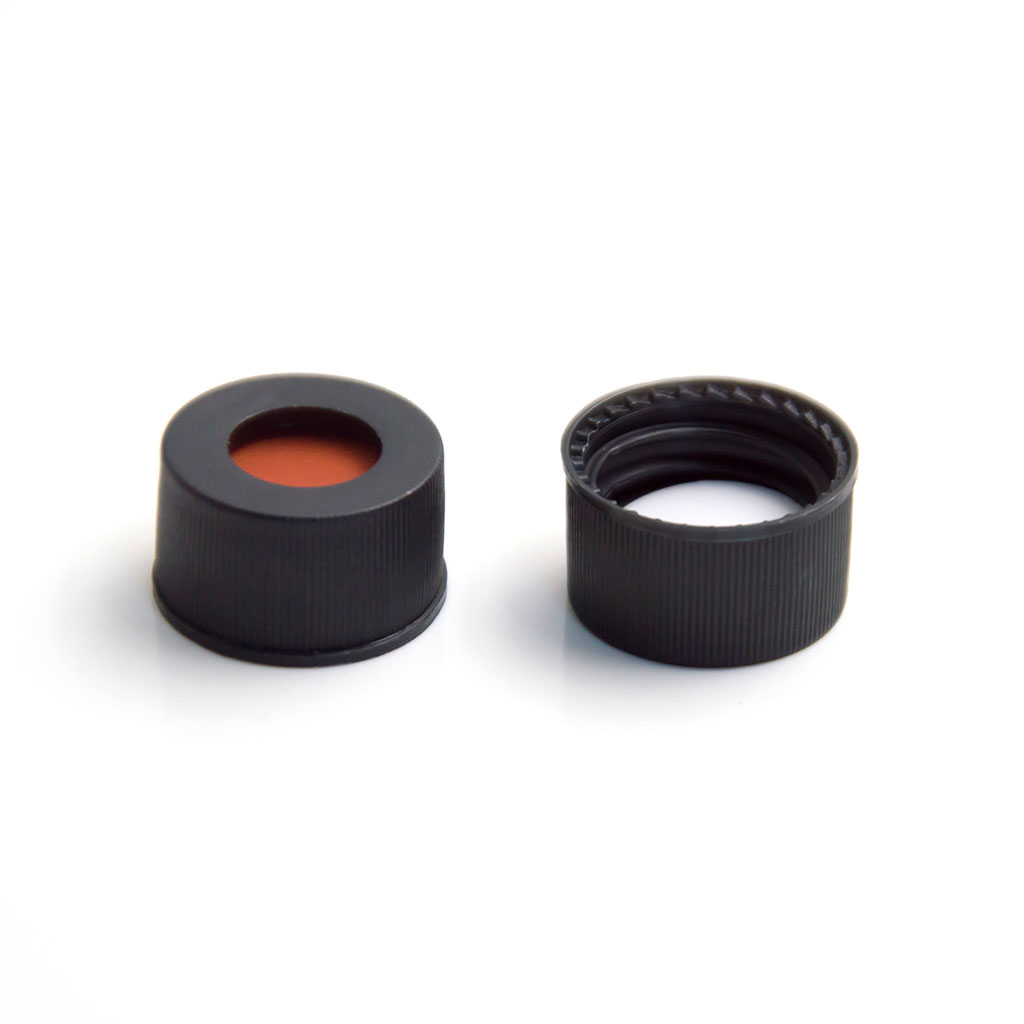
8-425 screw
1.5 mL
Narrow
None
Older Agilent and Shimadzu towers
9 mm short thread
1.5 / 2 mL
Narrow or wide
None
The modern default across most platforms
10-425 screw
1.5 mL
Wide
None
Methods that pipette directly from the vial
13-425 screw
4 mL
Wide
None
Larger injection volumes, wash and diluent positions
11 mm crimp
1.5 mL
Narrow
Crimper
High-throughput sequences, lowest cost per vial
11 mm snap
1.5 mL
Narrow
None
Manual workflows, no crimping
Wide opening matters more than most labs realise. A narrow 6 mm opening forces the needle close to the glass wall, which increases the chance of bending on a misaligned tower and makes manual pipetting awkward. If your method allows it, wide opening is the more forgiving choice.
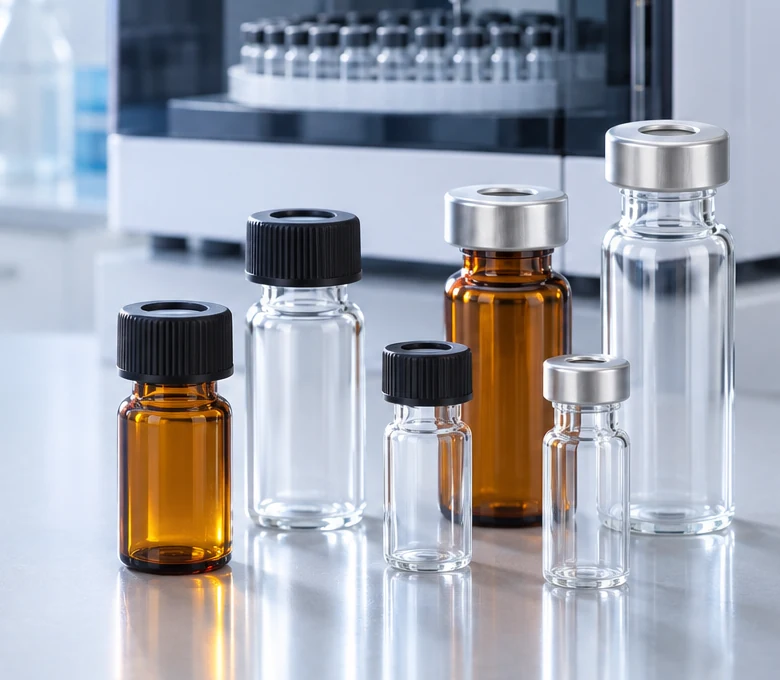
AI-generated illustrative image showing generic screw, crimp and cap formats; not to scale or tied to a specific part number.
Glass: what actually affects your data
Two glass properties matter for chromatography: hydrolytic class and surface activity.
USP Type I borosilicate — low alkali release, the safe default for pH-sensitive analytes, buffers and long sequences.
USP Type III soda-lime — adequate for neutral analytes and short runs, cheaper per vial.
Amber glass — for photolabile compounds. Amber adds no chemical protection; it only blocks light.
Deactivated or silanised glass — for basic compounds, proteins and trace polar analytes that adsorb onto active silanol sites. This is the single most effective fix for low and drifting recovery.
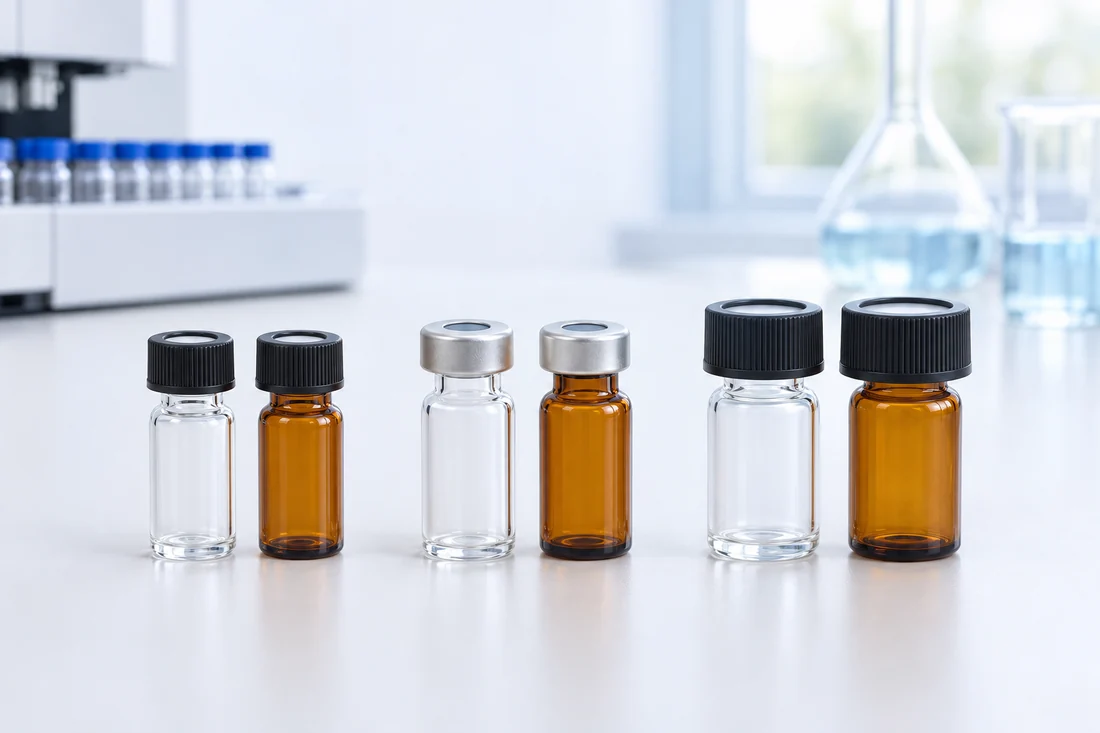
AI-generated editorial still life; exact vial size and closure are illustrative, not a product specification.
When you need an insert
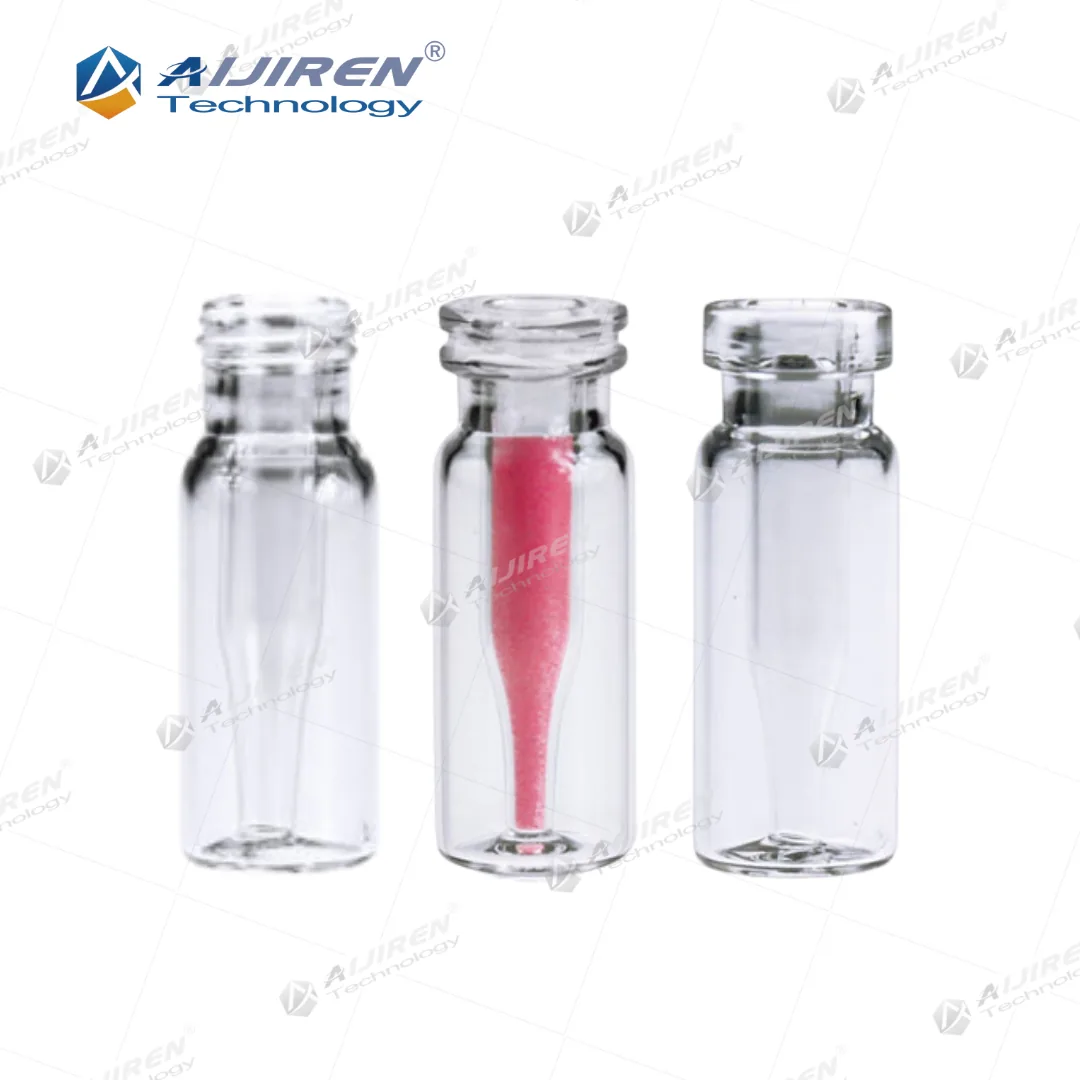
An insert reduces the dead volume so the autosampler can reach the last 100–200 µL of sample. Use one when:
You have less than about 300 µL of sample to work with.
You are running a high-cost or irreplaceable sample.
The method requires a low injection volume but the vial must still be handled normally.
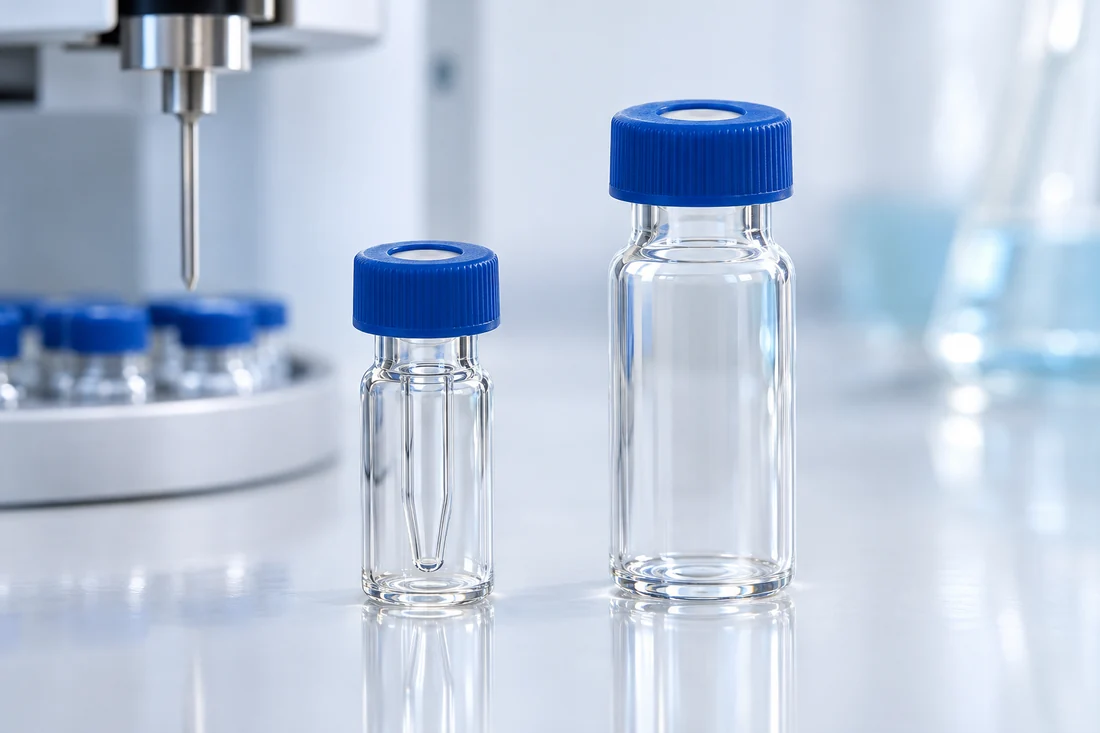
Inserts come in 150, 250 and 300 µL with conical or flat bottoms. Conical gives the best recovery on small volumes; flat bottom is easier for a needle that cannot reach a cone tip. Match the insert to the vial's internal geometry, not just the thread.
AI-generated illustrative image. Insert size and vial geometry are not to scale; use the linked product detail for specifications.
Common problems and fixes
Symptom
Likely cause
Fix
Intermittent "vial not found" errors
Cap height outside tolerance
Check cap lot; do not mix suppliers within a batch
Peak area drifts downward across a sequence
Adsorption onto active glass
Switch to deactivated or silanised vials
Ghost peaks in blanks
Septum coring from repeated injections
Pre-slit septa, or replace caps on a fixed schedule
Low recovery on small volumes
Sample below the needle reach
Use a conical insert matched to the vial
Needle bending
Narrow opening plus tower misalignment
Move to wide opening vials where the method allows
AI-generated illustrative image. Insert size and vial geometry are not to scale; use the linked product detail for specifications.AI-generated illustrative image showing generic screw, crimp and cap formats; not to scale or tied to a specific part number.
Frequently asked questions
What is the difference between 8-425 and 9 mm vials?
The thread diameter. 8-425 is an 8 mm thread used on older autosamplers; 9 mm short thread is the current standard on most platforms. They are not interchangeable — the cap will not seal on the wrong thread.
Do I need wide opening vials?
It depends on how you handle samples. Wide opening makes pipetting easier and reduces needle-wall contact. If your tower is well aligned and you never pipette from the vial, narrow opening is fine and slightly cheaper.
When should I use amber glass?
Only when the analyte is photolabile. Amber blocks light but offers no chemical benefit, and it makes it harder to see the sample level. For most methods clear glass is the better default.
Are silanised vials worth the extra cost?
For basic compounds, proteins and trace polar analytes, yes — the difference in recovery is usually obvious. For neutral small molecules at normal concentrations, plain Type I glass performs the same.
Can I reuse autosampler vials?
For non-trace work, vials can be washed and reused. Caps and septa should not be: a punctured septum leaks, and the resulting drift is difficult to trace back to the cap.
Browse by Closure System — 11 Verified Product Pages
ND9 / 9-425 Short Thread
ND9 (9mm) Short Thread — 2026 Universal HPLC Standard
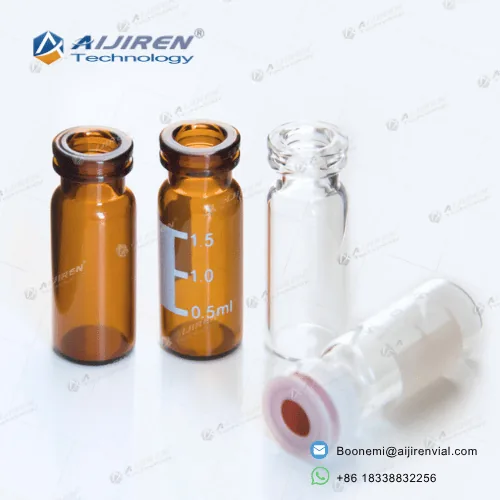
12×32 mm body, ±0.2 mm neck concentricity. Fits Agilent 1260/1290, Waters ACQUITY, Shimadzu Nexera, Thermo Vanquish — no adapter required. Opening is 40% larger than 8-425, eliminating needle deflection at high cycle counts.
GC note: Crimp closure is mandatory for volatile matrices. Snap closure is for HPLC/prep — do not use for GC volatile analysis.
ND8 / 8-425 Screw
ND8 (8-425) Screw — Legacy Platform & Specific Brand Compatibility
Retained for Agilent 1100/1200 and select older Waters Alliance platforms installed before 2018. The 8-425 opening is 40% narrower than ND9 — increased needle contact probability at high cycle rates. For all systems from 2018 onwards, ND9 is the recommended specification.
Maximum needle alignment clearance. Reduces cross-contamination risk during manual pipetting. Ideal for LC-MS/MS bioanalysis with low-volume samples (DBS reconstitution, microsampling workflows). 1.5 mL body with 10-425 thread.
ND13 (13-425) — 4 mL Large Volume & Wash Solvent Vials
4 mL capacity with 13-425 screw thread. Used for wash solvent reservoirs, fraction collection, and high-volume sample prep. Clear borosilicate. Compatible with 13mm cap assemblies.
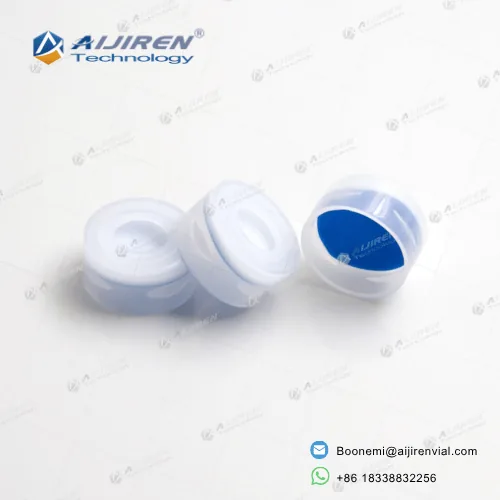
8mm diameter PE plug closure for the fastest sample loading cycle. Designed for high-throughput prep and direct-injection workflows where screw-threading cycle time is a bottleneck. Insert-vial geometry with flat-bottom precision.
Standard PTFE/silicone septa are a PFAS precursor material. Under EPA Method 1633 (effective January 2026), all fluoropolymer contact surfaces must be eliminated from PFAS sample containers. This section contains only fluoropolymer-free consumables.
Prohibited — Not Compliant for PFAS Trace Work
PTFE/silicone septa — PTFE is a perfluorinated polymer PTFE-lined screw caps in sample contact zone Any glass vial with fluoropolymer coating
Compliant PFAS-Free Configuration
Polypropylene (PP) vial body — zero fluoropolymer Polyimide or high-purity silicone septa only Background verified below 2.5 ppt for 47 target analytes Meets EPA 533, 537.1 & Method 1633
Part Numbers — PFAS-Free PP Vials & Closures: VP923 (PP screw vials, 1.5 mL, 9-425), VP923A (amber PP), with polyimide septa caps. These products are not yet listed in the online store — please contact your account manager or use the
Technical Consultation form below for pricing and availability.
For any method below 100 ng/mL, USP Type I, 33-expansion (Class A) borosilicate is mandatory. Expansion coefficient 33×10⁻⁷/°C — lowest metal ion leaching of all commercial glass. Prevents Na⁺/Ca²⁺ adduct formation in MS.
33 Expansion — Type I Class A Clear
Mandatory for:
Trace analysis below 100 ng/mL · LC-MS/MS full-scan · basic drug compounds · protein samples · GTI/ICH M7 genotoxic impurity work
Use 33-Expansion ND9 vials above
Silanized Vials — TMCS Surface Treatment
Surface silanization (TMCS) deactivates glass silanol groups. Required for alkaline drugs, basic proteins, and pesticide residue analysis where silanol adsorption causes peak tailing or analyte loss. Part No. VR913 — see below.
EPA 8270, ICH Q1B photostability, light-sensitive drugs, photolabile pesticides
Note
Slightly higher metal ion content than 33-expansion — do not use at sub-100 ng/mL unless photodegradation risk overrides
AI-generated editorial still life; exact vial size and closure are illustrative, not a product specification.
Decision rule: Use 33-expansion (clear) for any method below 100 ng/mL, for basic analytes, or when MS adduct ions are a concern. Use 51-expansion (amber) only when photodegradation is the primary risk and concentration is above 100 ng/mL. When both risks apply, use silanized 33-expansion in light-blocking secondary packaging.
Extended Catalogue — Part Numbers
Products Not Yet Listed Online — Enquire by Part Number
The following products are available from our manufacturing catalogue but are not yet published in the online store. Reference the Part No. below when contacting your account manager.
Part No.
Description
Application
Enquire
VP923
PP Screw Vials, 1.5 mL, 9-425, Clear
PFAS trace analysis (EPA 1633) — zero fluoropolymer body
Our application engineers match vials, closures, septa, and material grade to your specific method — HPLC, GC, trace LC-MS, PFAS, or silanized applications. We also handle enquiries for unlisted Part Numbers (VP923, VR913, and extended catalogue items). Free samples available before bulk commitment.
Method-Level Guidance
Ghost peak root cause, vial-method matching, septa selection for your matrix and temperature range.
Unlisted Part Numbers
PP vials, silanized vials, polyimide septa, custom kit assembly — confirmed with stock and lead time.
OEM & Bulk Supply
Custom print, branded packaging, mixed kit assembly. Full supply chain documentation from 500-piece MOQ.

 English
 Chinese